Fuel Consumption of Truck Tires
Truck tires play a key role in achieving the best possible fuel efficiency. With the right choice of tires, proper tire pressure, and effective tire management, you can systematically reduce fuel consumption. This not only lowers fuel costs but also directly contributes to reducing CO₂ emissions.
Schedule an appointment- Buy your truck tires directly from us
- Shipped from our warehouse in Deventer
- We’re happy to provide you with advice
Fuel Consumption and Regulations
Reducing fuel consumption is closely linked to laws and regulations regarding emissions. In line with the Paris Agreement, European regulations have been introduced for the CO₂ emissions of new heavy-duty commercial vehicles. These regulations stipulate that the average CO₂ emissions of new heavy-duty vehicles must be reduced by 15% by 2025 and by 30% by 2030 compared to the reference year 2019/2020. Because CO₂ emissions are directly linked to fuel consumption, efficient truck tires are a key tool for meeting these targets.
Three Key Factors Affecting Fuel Consumption
A truck’s total fuel consumption is primarily influenced by three factors:
- The efficiency of the engine and drivetrain;
- Air resistance (aerodynamics);
- Tire rolling resistance.
Although the engine and aerodynamics often receive the most attention, tire rolling resistance is actually a factor that is relatively easy to optimize, with immediately measurable results.
Rolling Resistance of Truck Tires
A tire’s rolling resistance has a direct impact on fuel consumption. The lower the rolling resistance, the less energy is required to keep the tire rolling. The difference between an A and a B rating on the tire label can result in fuel savings of up to approximately 3.5 liters per 100 kilometers. This not only reduces fuel costs but also lowers the transportation sector’s carbon footprint.
Fuel-efficient tires for long distances feature:
- a tread pattern optimized for low rolling resistance;
- rubber compounds with low internal friction;
- long and even wear.
In practice, the use of multipurpose tires or tires that are not tailored to the actual operating profile (e.g., regional or international transport) often leads to demonstrably higher fuel consumption.
The lifecycle of a truck tire
The life cycle of a tire also plays a role. New tires generally have higher rolling resistance than tires that have been broken in. For a complete truck-trailer combination, this can result in 2 to 3% additional fuel consumption in the initial phase, which gradually decreases as mileage increases.
Interested in our full product range?
Check out our online store!
Tire Pressure and Fuel Consumption
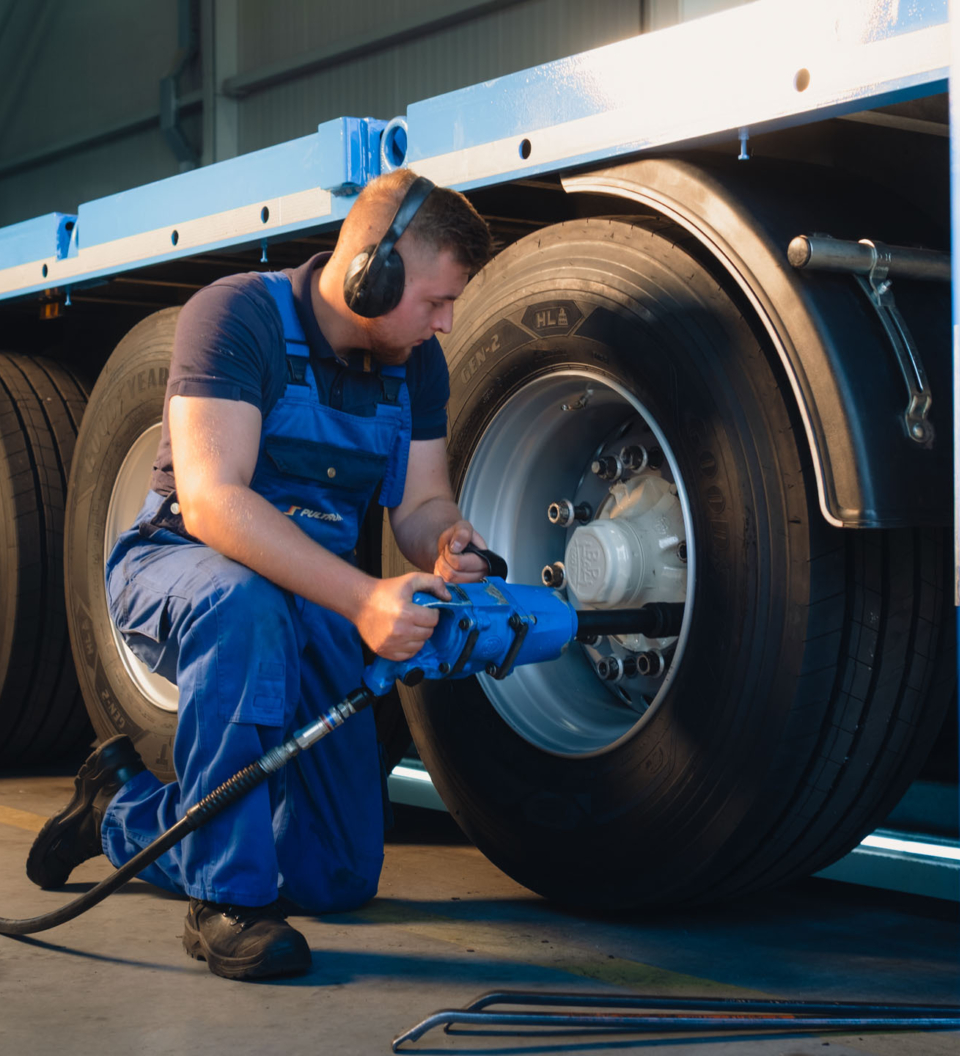
Proper tire pressure is essential for safety, tire life, and fuel efficiency. Underinflation is one of the most common causes of unnecessary fuel consumption. Tires with insufficient pressure increase rolling resistance and lead to:
- higher fuel consumption and additional CO₂ emissions;
- longer braking distances;
- reduced maneuverability and vehicle control;
- accelerated and uneven tire wear;
- higher maintenance and replacement costs.
Would you like to get to know us better?
Request our free brochure today!
Excessive tire pressure
Excessively high tire pressure is also undesirable. It reduces traction, decreases ride comfort, and increases the risk of tire damage or even a blowout. Regular checks and adjusting tire pressure based on load, axle load, and intended use are therefore essential in professional tire management.
Furthermore, the load weight (ballast) affects fuel consumption. A heavier load causes greater tire deformation, which increases rolling resistance. Choosing the right tires, tailored to the maximum load capacity and type of transport, helps minimize this additional resistance.
A-rated truck tires
Tire Selection and Its Impact on Overall Fuel Consumption
The choice of truck tires has a significant impact on total fuel consumption. Tires with low rolling resistance, such as A-rated tires, utilize advanced tread patterns and specific rubber compounds—including in the sidewalls—to minimize friction.
Are you considering switching to premium, fuel-efficient tires? These tires can significantly reduce your total annual fuel costs. Request a calculation from Mijnheer Truckbanden to get an immediate overview of your savings.
How We Ensure Success
01 We prioritize personal contact
It’s no coincidence that we call ourselves “tire creators.” We regularly stop by to catch up with you or one of your employees.
02 We provide expert advice
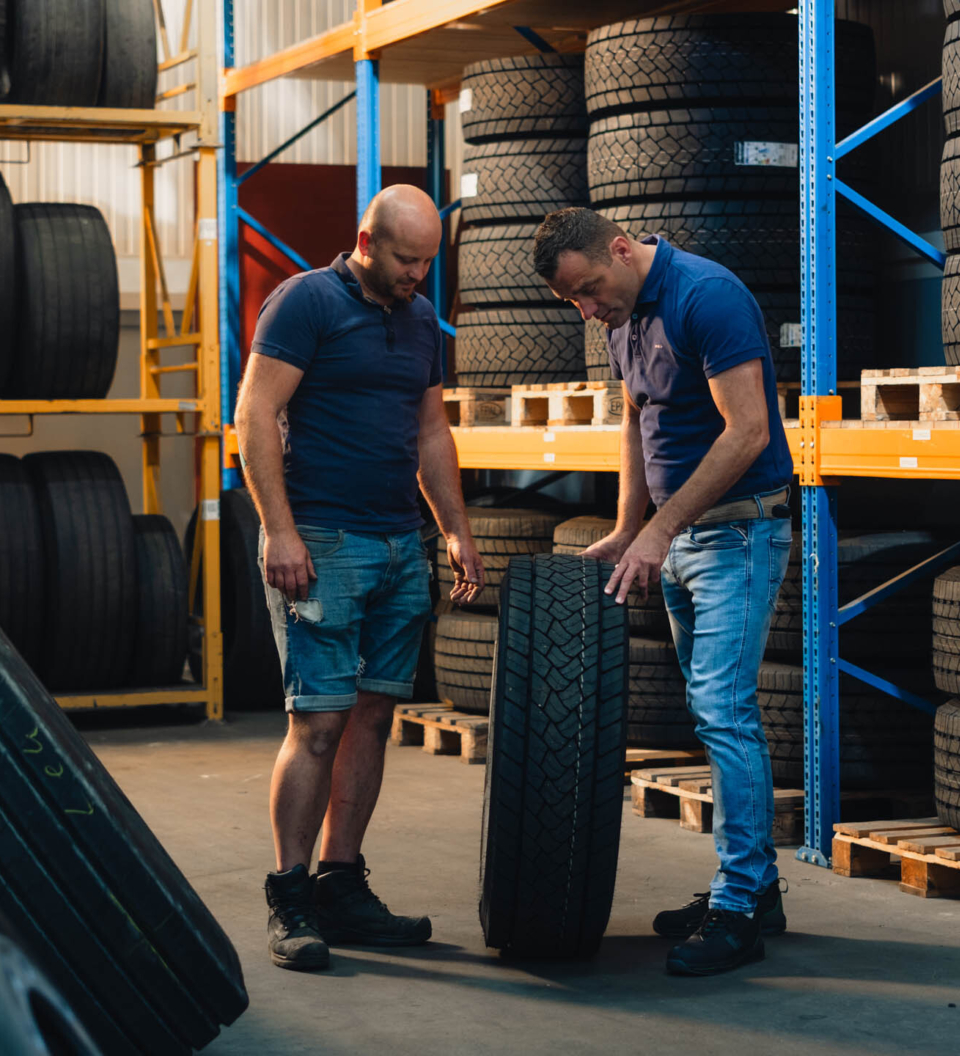
Figuring out for yourself which tires are the best choice for which truck? Not with us. We advise you personally, drawing on our years of experience.
03 We offer competitive prices
We guarantee you the best value per kilometer. We don’t go for the cheapest tire, but for the best tire tailored to the environment.
Sustainability and Fuel Efficiency
Reducing fuel consumption and lowering CO₂ emissions are inextricably linked to sustainable transportation. Investing in the right truck tires is a concrete and immediately actionable step toward more sustainable operations. Lower fuel consumption means fewer emissions, lower costs, and a smaller environmental impact.
By consciously choosing fuel-efficient tires, you actively contribute to making the transportation sector more sustainable. From this perspective, tire management is an important part of a broader sustainability strategy, which you can read more about on our sustainability page. Are you looking for the right truck tires for your fleet? At Mijnheer Truck Banden, we’re happy to advise you. You can also purchase your truck tires directly from us.
Custom advice
Go to online storeSchedule an appointment, we are happy to visit you for a nonobligatory consultation.