You need to take into account service life, budget, regulations and laws, and fuel consumption

Peter Mijnheer
Schedule an appointment, we are happy to visit you for a nonobligatory consultation.
Make an appointment
As an experienced multi-brand supplier of truck tires, we’re happy to advise you and take care of everything for you.
Tires play a vital role in vehicle safety and performance, as they are the only point of contact between the vehicle and the road.
To keep our world moving, we must take action now and invest in sustainable change. This is not only necessary to remain competitive in the future, but above all to be able to live on a healthier planet. Reducing fuel consumption and cutting CO₂ emissions are therefore essential. In line with the Paris Agreement, the first regulations governing CO₂ emissions from new heavy-duty vehicles have been introduced. This legislation requires that the average CO₂ emissions of new heavy-duty vehicles be reduced by 15% by 2025 and by 30% by 2030 compared to emissions in 2019/2020. CO₂ emissions are directly related to fuel consumption.
The three main factors influencing this consumption are the vehicle’s engine, aerodynamic drag, and the rolling resistance of the tires. The EU has implemented strict tire regulations to protect drivers, passengers, and the environment. These rules focus on key aspects such as tire construction and materials, which ensure durability and resilience under various conditions. They also promote the transition to more sustainable products and a circular economy. In addition, performance standards are established, including requirements for wet grip, noise emissions, rolling resistance, and tire wear. Tires must be approved following type approval and compliance testing to ensure they meet safety standards before being placed on the market.
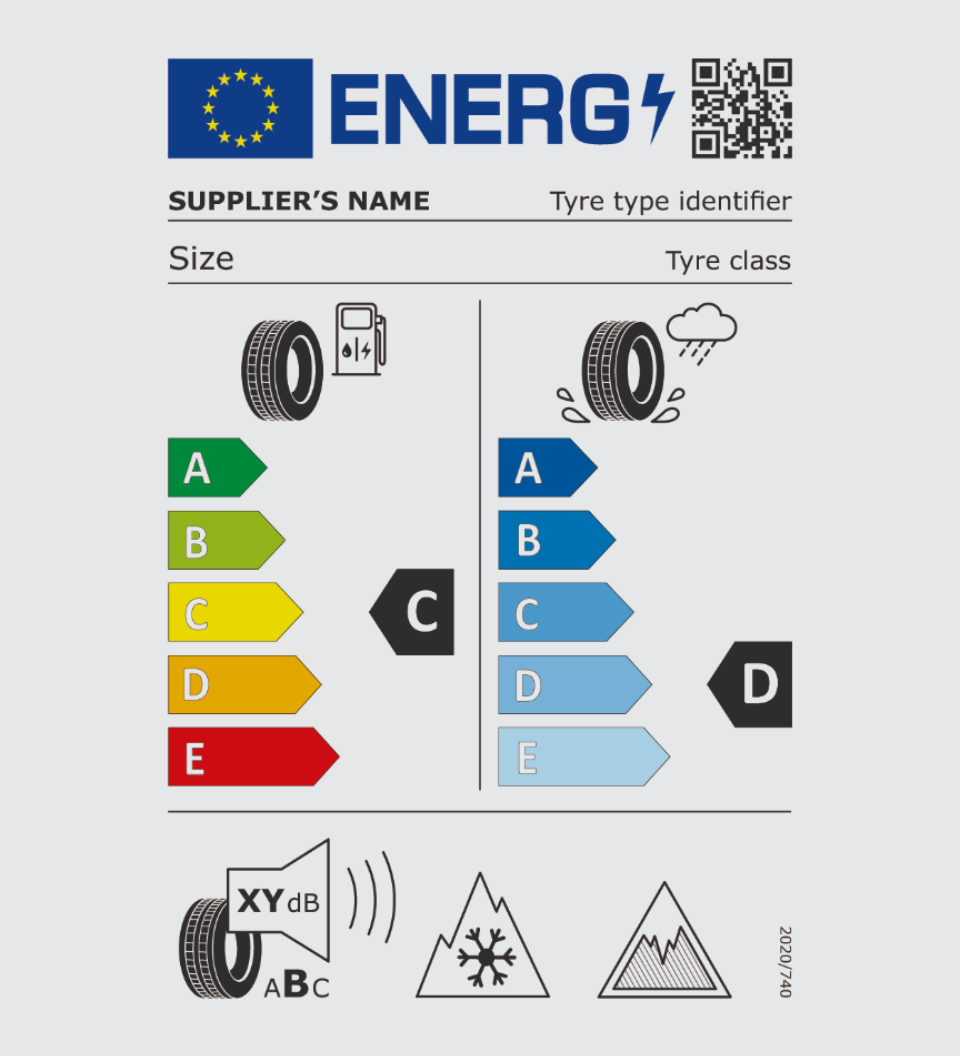
The tire label evaluates tires based on efficiency, safety, and environmental protection, covering performance in fuel efficiency, wet grip, and rolling noise. The label has seven categories ranging from A (best performance) to G (worst performance), and encourages the use of fuel-efficient, safe, and quiet tires to improve safety and protect the environment.
The rolling resistance of trucks has a direct impact on fuel consumption, which is important from both an economic and environmental perspective. The difference between an A and a B rating can result in fuel savings of 3.5 liters per 100 kilometers, which lowers operating costs and reduces the CO₂ footprint—both of which are essential for the sustainability of the transportation sector.
Traction on wet roads is essential for truck safety, as it shortens the braking distance on wet roads. An improvement of one class can reduce the braking distance during an emergency stop from 80 km/h by 5 to 10 meters, which can be lifesaving in emergency situations. This underscores the importance of good traction in the transportation sector.
The rolling noise from truck tires contributes to traffic noise, and the label indicates the noise level in decibels, divided into three classes. Tires with three sound waves do not meet noise regulations, while tires with one sound wave are more than 3 dB below the limit, which significantly contributes to reducing noise pollution in the transportation sector.
The EU is heavily dependent on imports of natural rubber, primarily from Indonesia, Thailand, Ivory Coast, and Malaysia, which together account for 85% of EU imports.
The natural rubber supply chain is complex and fragmented, involving small farmers, traders, processors, and manufacturers. In this dynamic process, rubber latex is harvested, processed, and transported through multiple layers of the supply chain every day before it reaches tire and rubber product manufacturers.
The storage and transport of natural rubber require extensive logistics, with a large portion of the rubber sourced from processors within a radius of 150 to 200 km. When stored properly, rubber can have a long shelf life. However, the “first-in, first-out” principle is not always followed, resulting in the rubber often being transported over long distances, which affects efficiency and costs in the tire industry and transportation sector.
Schedule an appointment, we are happy to visit you for a nonobligatory consultation.
Make an appointmentSchedule an appointment, we are happy to visit you for a nonobligatory consultation.
Make an appointment